Many Georgia distribution centers have now run a pilot with autonomous mobile robots. The robots navigated the building, associates adapted, and productivity improved in a test zone. Then comes the harder question: how do you turn a successful pilot into a fleet that runs reliably across multiple zones, customers and seasons?
Scaling AMRs is a different challenge from piloting them. Fleets grow from a handful of robots to dozens or hundreds. Maintenance, charging, traffic, peak season and staffing all become more complex. This article focuses on that second phase: how Georgia warehouses operate and scale AMR fleets after the pilot. For AMR types, safety standards and how to run a pilot, see our earlier guide to autonomous mobile robots in Georgia distribution centers.
- Traffic grows non-linearly. Doubling the robots more than doubles interactions at aisles, intersections and charging stations.
- More zones, more variation. Different customers, products and processes require different workflows.
- Peak season tests capacity. Fleets sized for normal days can bottleneck on the busiest weeks.
- Maintenance becomes routine work. A few robots can be supported by the vendor; a large fleet needs in-house capability.
- People change. New associates, supervisors and temporary staff must learn to work with robots.
| Metric | What It Shows | Why It Matters |
|---|
| Fleet availability | Share of robots ready for work | Low availability means hidden capacity loss |
| Mission completion rate | Tasks completed without intervention | Reveals navigation, mapping or process problems |
| Interventions per shift | How often people must help robots | High numbers erode labor savings |
| Average mission time | Time per task | Rising times signal congestion or poor slotting |
| Charging utilization | Time robots spend charging versus working | Guides charger placement and schedules |
| Units per labor hour | Productivity of the combined human and robot system | The core business result |
| Mean time between failures | Reliability of robots and components | Drives spare parts and maintenance planning |
AMRs report most of this data automatically. The key is getting it out of the vendor's software and into dashboards supervisors use every shift.
As fleets grow, congestion becomes the biggest performance drag. Practical techniques include one-way aisles, defined passing zones, staggered charging, dedicated robot lanes in busy areas and moving fast-moving products to reduce travel. Heat maps of robot positions and wait times show exactly where congestion forms. Re-slotting based on robot travel data is often one of the highest-return actions after scale-up.
Georgia distribution centers serving retail and e-commerce see large volume spikes from late fall through the holidays. Fleets should be planned for peak days, not average days. Options include:
- Flexible fleet size. Robotics-as-a-service contracts can add robots for peak months.
- Extended shifts. Robots can work longer hours, but charging must keep up.
- Process changes. Wave and batch strategies may need to change at peak.
- Dry runs. Test peak volumes before the season to find bottlenecks.
- Staffing plans. Train temporary associates on robot interaction before they start.
Many Georgia warehouses are not fully air conditioned, and summer temperatures inside can exceed what some batteries and electronics tolerate. Fleet data often shows shorter battery runtime, more charging time and occasional faults on hot afternoons. Operators can respond by confirming robot temperature ratings, placing chargers in cooler areas, adjusting charging schedules and monitoring battery health closely through summer. Our guide to smart warehouses in Georgia covers heat mapping.
Large fleets need local maintenance skills. A typical approach:
- Train a small team of technicians on routine tasks such as cleaning sensors, replacing wheels and batteries and diagnosing common faults.
- Keep critical spare parts on site, guided by failure data.
- Schedule preventive maintenance during low-volume periods.
- Track every repair to identify recurring issues and push vendors to fix them.
- Define escalation paths for problems the in-house team cannot solve.
Georgia's technical colleges offer mechatronics and industrial maintenance programs that build relevant skills, and Georgia Quick Start supports training for qualifying new and expanding companies.
As operations grow, many sites add a second robot type or vendor, such as pallet movers alongside picking robots. Without coordination, different fleets can block each other. Interoperability standards like VDA 5050 and orchestration software that manages multiple fleets help, but support varies. Plan for mixed fleets early, and ask vendors how their systems will share traffic and data with other robots.
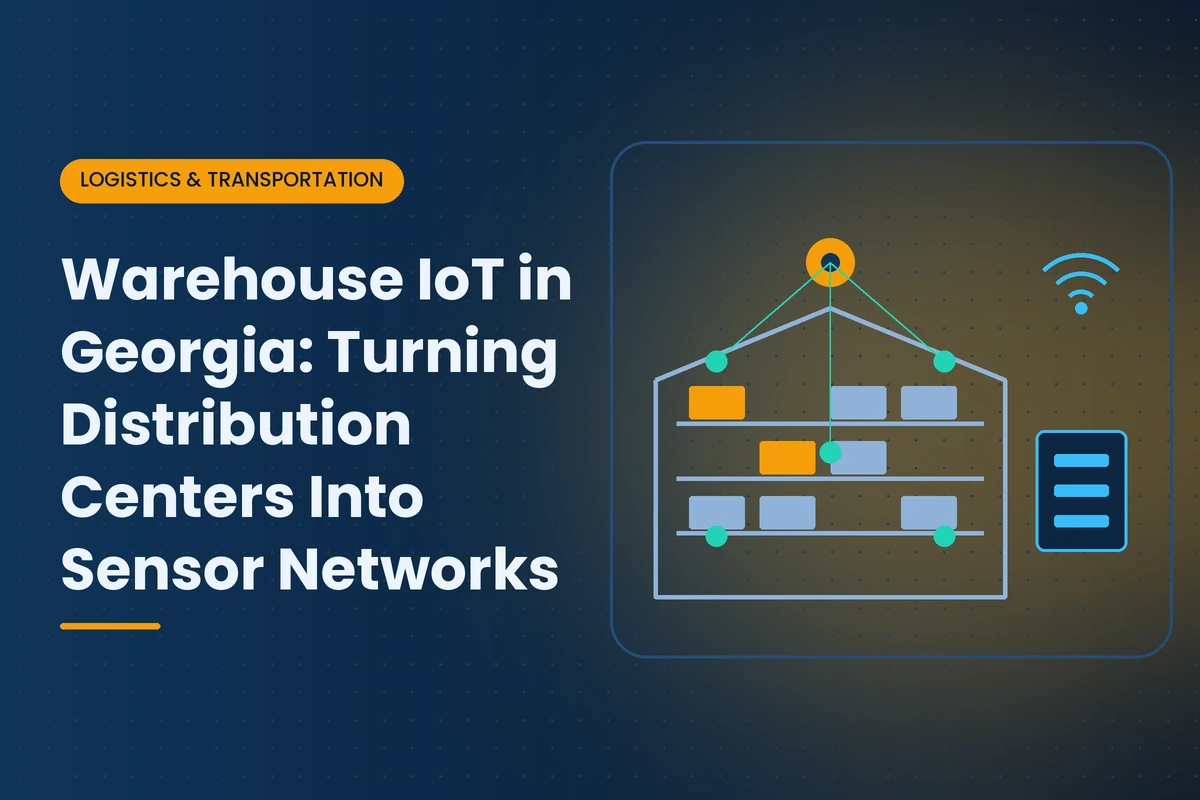
A scaled fleet should not operate as an island. Robot data becomes more useful when combined with warehouse management, labor management, dock schedules and environmental data. For example, linking inbound trailer ETAs to robot staffing helps prepare for receiving surges. Our article on turning distribution centers into sensor networks explains how to build that shared foundation.
Scaling robots changes jobs. Associates spend less time walking and more time picking, packing and handling exceptions. New roles appear: robot fleet coordinators, technicians and data-focused supervisors. Clear communication about how roles change, along with training and recognition, keeps teams engaged and reduces resistance. Sites that involve associates in improving robot workflows often find better ideas than those that come from engineering alone.
AMRs depend on accurate maps. As fleets scale, layouts change more often: new racking, new customers, seasonal staging areas and temporary storage. Each change needs a map update and testing. Assign clear ownership for map changes, schedule them during low-volume periods and communicate them to associates. Unplanned obstacles such as pallets left in aisles cause frequent interventions, so housekeeping standards become part of robot performance.
- Are pilot results holding as the fleet grows, or are interventions and mission times rising?
- Do we have enough wireless coverage, chargers and floor space for the next phase?
- Can our maintenance team support more robots, or do we need more technicians?
- How will a second robot type or vendor share traffic with the current fleet?
- Does the contract allow us to add or remove robots as customer volumes change?
Answering these questions before each expansion avoids repeating early problems at a larger scale.
Revisit the business case after scaling. Compare actual units per labor hour, overtime, temporary labor costs, error rates and fleet costs against the pilot projections. Include hidden costs such as wireless upgrades, maintenance staff and peak rentals. Honest reviews help decide whether to expand further, change vendors or redesign processes.
Consider a hypothetical third-party logistics provider in Gwinnett County that piloted 15 collaborative picking robots for one apparel client and then scaled to 90 robots across four clients. In the first months after scaling, productivity gains were lower than in the pilot. Fleet data showed congestion at two main aisle intersections, robots waiting for chargers on hot afternoons and frequent interventions in one client's zone with poor label quality. The provider introduced one-way traffic, added chargers in a cooler area, shifted charging schedules and worked with the client to fix labels. It trained four technicians to handle routine maintenance and kept spare wheels and batteries on site. Before peak season, it rented additional robots and ran a full-volume dry run. Productivity returned to pilot levels and held through the holidays.
Large fleets receive regular software updates that can change navigation behavior, speeds or integration features. Test updates on a few robots or in a quiet zone before rolling them out to the full fleet, schedule updates outside peak periods and keep a rollback plan. Track performance metrics before and after each update so problems are caught quickly. Clear change management prevents a single update from disrupting an entire building during a busy week.
Finally, document what works. Standard operating procedures for robot zones, charging, map changes and maintenance let new sites and shifts reach full productivity faster.
- Copying the pilot layout everywhere. Each zone needs its own traffic and slotting design.
- Underinvesting in wireless and charging. Infrastructure must grow with the fleet.
- Relying entirely on the vendor for maintenance. Response times slow as fleets grow.
- Ignoring intervention data. Frequent human help is a sign of process problems.
- Not planning for peak. The busiest weeks determine whether the fleet succeeds.
Expect larger and more mixed fleets in Georgia distribution centers, better interoperability between vendors, and AI tools that predict labor and robot needs by hour. Robots will increasingly share data with warehouse systems and other equipment, becoming part of a broader connected operation. Operators that build strong fleet management, maintenance and data practices now will scale faster and more profitably as automation spreads.
For related reading, see our articles on warehouse automation in Georgia and robotics and IoT in manufacturing. To find robotics partners, browse the IoT Georgia company directory or explore logistics IoT providers in Atlanta. Browse more of our Logistics and Transportation coverage.
Frequently asked questions
Traffic grows faster than fleet size, more zones add variation, peak season tests capacity, maintenance becomes routine work and more people must learn to work with robots.
Fleet availability, mission completion rate, interventions per shift, mission time, charging utilization, units per labor hour and mean time between failures.
High temperatures in non-conditioned buildings can shorten battery runtime, increase charging time and cause faults. Operators adjust charger placement, schedules and battery monitoring in summer.
Size for peak days, use flexible rental or subscription options, run full-volume dry runs, adjust processes and train temporary staff before peak begins.
Large fleets benefit from trained in-house technicians for routine maintenance, with on-site spare parts and clear escalation to vendors for complex issues.
Interoperability standards such as VDA 5050 and multi-fleet orchestration software help, but support varies by vendor, so plan for mixed fleets early.
Related articles


 Logistics & Transportation