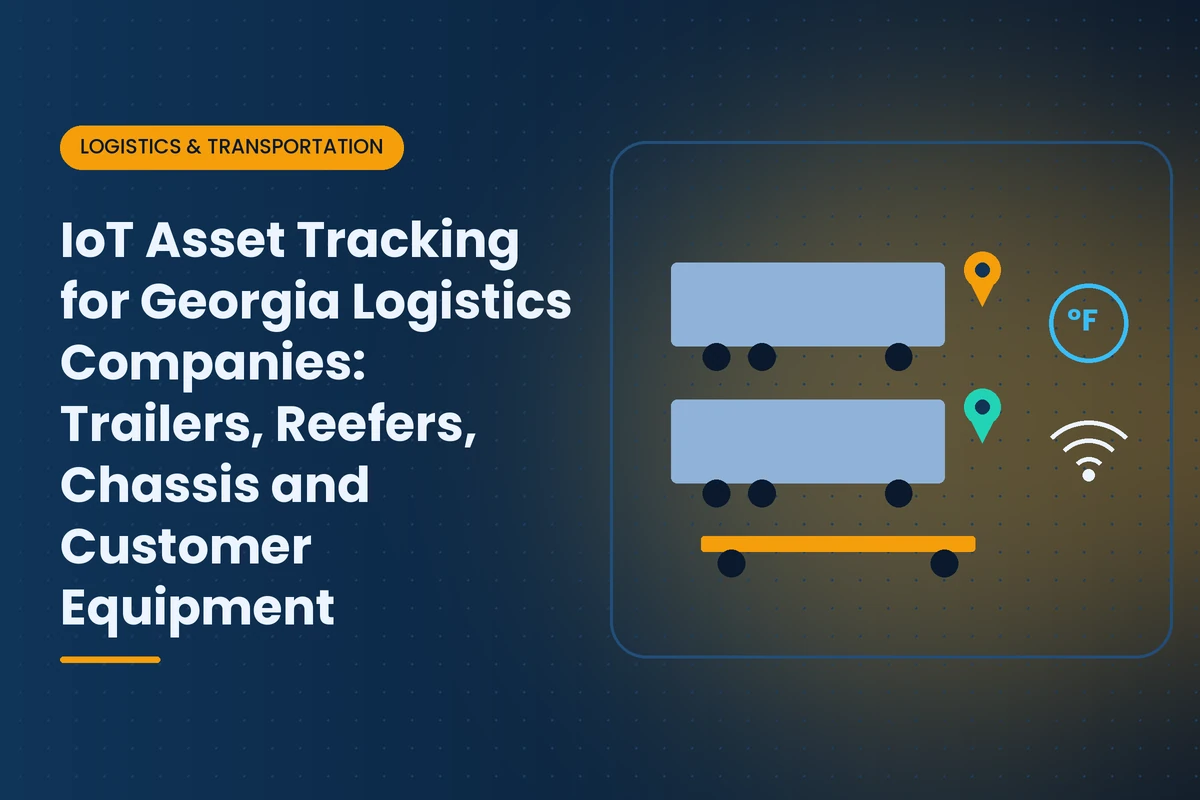
For a logistics company, assets are the business. Trailers, reefer units, chassis, containers, pallets, carts and specialized racks represent large investments, and every one of them earns money only when it is in the right place, in good condition and in use. In Georgia's busy freight market, with the Port of Savannah, metro Atlanta's distribution hub and growing inland rail, assets scatter quickly across customer yards, terminals, rail ramps and partner facilities.
This article looks at asset tracking from the perspective of logistics companies themselves: trucking carriers, drayage firms, third-party logistics providers and equipment pools. It focuses on the business results tracking can deliver, from higher utilization to better billing and new services. For tracking inside plants and warehouses, see our guides to IoT asset tracking in Georgia and warehouse asset tracking.
| Asset | Main Problem Without Tracking | What Tracking Delivers |
|---|
| Dry van trailers | Trailers sit unused at customer sites | Utilization data, faster recovery, fewer trailers needed |
| Reefer trailers and units | Temperature problems discovered too late | Remote temperature, fuel and unit status |
| Chassis | Shortages and lost or damaged units | Location, inspection and repair status |
| Containers | Detention and demurrage charges | Dwell time and timely returns |
| Pallets, carts and racks | Losses and replacement costs | Return tracking and accurate charges |
| Customer-owned equipment | Disputes over location and condition | Shared records and accountability |
Many fleets carry more trailers than they need because they do not know where idle trailers are or how long they have sat. Tracking shows each trailer's location, loaded or empty status and dwell time. With that data, dispatchers can reposition empties, recover trailers from customers that hold them too long and reduce the total fleet without hurting service. For carriers with drop-trailer operations across metro Atlanta and the I-75 and I-85 corridors, even small utilization gains free up significant capital.
Detention, time trucks and trailers wait beyond agreed limits at customer facilities, is a persistent cost for carriers. Disputes are common because records are incomplete. Geofenced arrival and departure times from trackers and telematics create objective evidence of how long equipment waited. Carriers use that data to bill detention accurately and to show customers where their docks are slowing freight. Shippers can use the same data to fix dock problems and avoid charges.
Refrigerated carriers and cold storage operators track reefer temperature, set points, fuel levels and alarms. Beyond protecting cargo, this data has commercial value. Many customers, especially food and pharmaceutical shippers, now expect temperature records for every load. Providing those records automatically, through portals or data feeds, becomes a selling point. Our article on Georgia cold chains covers temperature requirements.
Drayage companies around Savannah depend on chassis and containers they often do not own. Tracking chassis location and condition helps them find equipment quickly and avoid fees. Tracking container dwell at warehouses and rail ramps reduces detention and demurrage charges from shipping lines. Our article on Savannah's connected logistics ecosystem describes how drayage connects the region.
Cargo and equipment theft is a concern in major distribution markets including metro Atlanta. Trailer trackers with tamper alerts, door sensors, geofence alerts for unauthorized movement and immobilization features on some equipment help prevent and recover thefts. Insurance providers increasingly consider tracking in risk assessments.
Tracking devices often report more than location. Mileage, engine hours on reefer units, door cycles, tire pressure on some systems and fault codes help maintenance teams schedule inspections and repairs before breakdowns. Inspection records linked to each trailer and chassis support safety compliance and reduce roadside violations. Over time, this data shows which equipment costs the most to maintain and when replacement makes more sense than repair.
| Tracker Type | Power Source | Best For | Trade-offs |
|---|
| Solar or battery trailer trackers | Solar panel plus battery | Untethered trailers and chassis | Less frequent updates when parked in shade |
| Wired telematics | Vehicle or reefer power | Tractors and reefer units | Installation required |
| Long-life battery trackers | Internal battery | Containers, pallets, high-value racks | Limited reporting frequency |
| RFID or BLE tags | Passive or small battery | Pallets, carts and equipment at known facilities | Needs readers or gateways |
Georgia heat matters here as well. Devices mounted on trailers and chassis face high summer temperatures, so check operating ratings and battery performance in hot conditions.
A logistics company can estimate tracking value with a few numbers: the number of trailers or chassis it owns or leases, the average cost of each, the share sitting idle at any time, detention hours not billed and recent theft or loss events. If tracking lets the company operate with even a small percentage fewer trailers, or bill detention it currently loses, the savings often exceed device and subscription costs within the first year. Start with a pilot on part of the fleet to confirm the numbers.
Customers increasingly expect to see where their freight is and in what condition. Logistics companies can share tracking data through customer portals, visibility platforms or direct integrations. Clear agreements on what data is shared, how often and how it may be used protect both sides. Shared data also builds trust: when a customer sees the same dwell times the carrier sees, conversations about detention and dock performance become easier. Our article on supply chain visibility maturity explains data-sharing standards.
Tracking delivers value only when it is part of daily work:
- Dispatch: Show trailer and chassis locations in the dispatch system so planners can assign the nearest available equipment.
- Billing: Feed detention and dwell data into invoicing automatically.
- Maintenance: Use mileage, hours and alerts to schedule inspections and repairs.
- Customer service: Share location and condition data with customers through portals or integrations.
- Planning: Use utilization history to decide how many assets to buy, lease or retire.
For third-party logistics providers, tracking can become part of the offering. Examples include guaranteed temperature records for food customers, real-time shipment visibility portals, returnable container management for manufacturers and dock performance reports that help customers reduce detention. These services differentiate providers in a competitive Georgia market and can support premium pricing.
Consider a hypothetical regional carrier based in Clayton County with 120 tractors and 450 dry van and reefer trailers serving retailers and food distributors across Georgia and neighboring states. The carrier believed it needed more trailers to keep up with demand. After installing solar trailer trackers and integrating reefer telematics with dispatch, it found that about one in six trailers sat idle at customer sites for more than five days at a time. Dispatchers began recovering idle trailers proactively, and the sales team used dwell data to renegotiate drop-trailer terms with two customers. Detention billing became more consistent because arrival and departure times were recorded automatically. The carrier postponed a trailer purchase and began offering automated temperature reports to its food customers as a standard service.
- How often do your trackers report when trailers are parked for days?
- How do devices perform in Georgia summer heat and in shaded yards?
- Can tracking data feed our dispatch, billing and maintenance systems?
- Do you support geofences for customer sites, rail ramps and port terminals?
- What is the installation process, and who replaces failed devices?
- Tracking without process. Data that nobody acts on does not improve utilization.
- Ignoring customers. Explain detention data and use it to solve problems together, not only to bill.
- Too many platforms. Separate systems for trailers, reefers and chassis create extra work.
- Underestimating installation and maintenance. Devices need mounting, monitoring and replacement plans.
- Start with the costliest assets. Reefers and high-utilization trailers usually show results first.
- Define geofences. Set up customer sites, terminals, rail ramps and yards before devices go live.
- Train dispatchers and sales staff. They turn data into recovered trailers and better contracts.
- Review weekly. Look at idle assets, detention and alerts, and assign follow-up actions.
- Expand in phases. Add chassis, containers and returnable equipment once processes work.
Expect trackers to become standard equipment on new trailers and chassis, more shipping lines to share container tracking data, and more integration between tracking, dispatch and billing systems. AI will help predict where equipment will be needed and recommend repositioning. As Georgia freight volumes grow, logistics companies that know where every asset is, and use that knowledge to run tighter fleets and offer better service, will have a clear advantage.
For related reading, see our articles on fleet tracking and telematics, connected freight corridors and supply chain visibility maturity. To find tracking partners, browse the IoT Georgia company directory or explore logistics IoT providers in Atlanta and Savannah. Browse more of our Logistics and Transportation coverage.
Frequently asked questions
Common assets include dry van and reefer trailers, reefer units, chassis, containers, pallets, carts, racks and customer-owned equipment.
It shows each trailer's location, status and dwell time, so dispatchers can recover idle trailers, reposition empties and often operate with fewer trailers.
Geofenced arrival and departure times create objective records of how long equipment waited at customer facilities, supporting accurate detention billing and dock improvements.
Solar-powered trackers with batteries are common for untethered trailers and chassis, while wired telematics suit tractors and reefer units.
Yes. 3PLs and carriers offer temperature records, visibility portals, returnable container management and dock performance reports as value-added services.
Yes. Devices on trailers and chassis face high summer temperatures, so companies should confirm operating ratings and monitor battery performance.
Related articles

 Logistics & Transportation